Cumberbatch is pissed: Audience development introduced by Evil Lyn.
While finishing my digital work I came across a clip on the internet that was from Victoria Derbyshire on the BBC. Naga Munchetty was discussing Benedict Cumberbatch’s discomfort at being photographed and filmed with guest Caroline Crampton, the web editor of the NewStatesman. It was one of the most refreshing discussions I have heard in a really long time, Crampton gave an incredibly honest and constructive advice on how theatres should start catering to the new type of audience today.
YES. And not once did she talk about Shakespeare, it was brilliant! Sounds odd since the play was written by Shakespeare, but instead discussed the situation at hand , that being the relationship between audience and theatre. No ‘this is what Shakespeare would of wanted, he told me in a dream while riding a dragon’ or ‘the audience needs to have appropriate theatre etiquette, if they knew that they would be foaming by the mouth with joy by the second act’, instead a direct and candid conversation about the new audience and how a theatre could better meet those needs. Actually I don’t want to use the word ‘needs’, it gives me an image that the audience is some sickly dog, instead STRENGTHEN the relationship between audience and theatre to reach further potentials of theatre making.
Here are some of my notes from this interview:
New audience, new needs.
Impact of the content of the play- A well know actor on stage witnessed in real time and not on screen is definitely going to make an audience lose their shit.
In the room experience.
Start creating new services to accommodate to these new needs
Value the audience, don’t piss them off they just paid for tickets. And most likely won’t pay again.
Crampton really honed in about the ‘in the room experience’, putting a Hollywood actor on the stage completely alters not just the play but the audience. Of course they want to take a picture so why not designate a time after the performance where the audience could have this opportunity. Theatres should start exploring more creative ways to form a congruous relationship with the audience, like a modern day Jessica Fletcher. Jessica Fletcher lived in probably the most violent and gruesome town Cabot Cove. A town that appears to be occupied by shiny and smiley happy people, yet a ridiculous amount of people are murdered, an odd juxtaposition between character and set but thats a discussion for another time. That doesn’t deter Fletcher she thrusts herself directly into the action, even in places where she is clearly breaking the law. She solves every murder AND incorporates her discoveries into a thriving writing career.
Not a lot of people are aware of an episode with an irritated Fletcher, its near to impossible to find on the internet. The episode where the chief of police is once again giving out to Fletcher for putting her nose into information where it doesn’t belong, the camera pans to Fletcher who is red with rage answers ‘Fuck you, boundaries are my jumping post to discovery, you dickhead’. It’s all true I saw it with my own vision impaired eyes.

Don’t mess with Jess
– From a t-shirt I was given as a present.
From my wonderfully random analogy you can understand that constructive and candid discussions about theatre like with Crampton are so useful and dare I say pertinent to strengthen the bond either physical or psychological between audience and theatre. I have always fused audience development into the dramaturgy of a theatre piece. This usually happens at the very beginning and coming up to the end of rehearsals, I have made a series of questions to ask the theatre company about the play with respect to the audience. For the simple reason, if you don’t know what is happening in your play how is the audience going to understand. Or if you would like to take a dramatic artistic stance you can just say (more so not say) you are part of the theatre of silence movement, that will shut them up.
If not here is Evil Lyn, she helps me with a lot of my projects. She is incredibly intelligent but does have a tendency to become a bit over powering claiming that she will rule Eternia. Here are some questions that I put in dramaturg reports concerning audience development specifically with theatre companies.
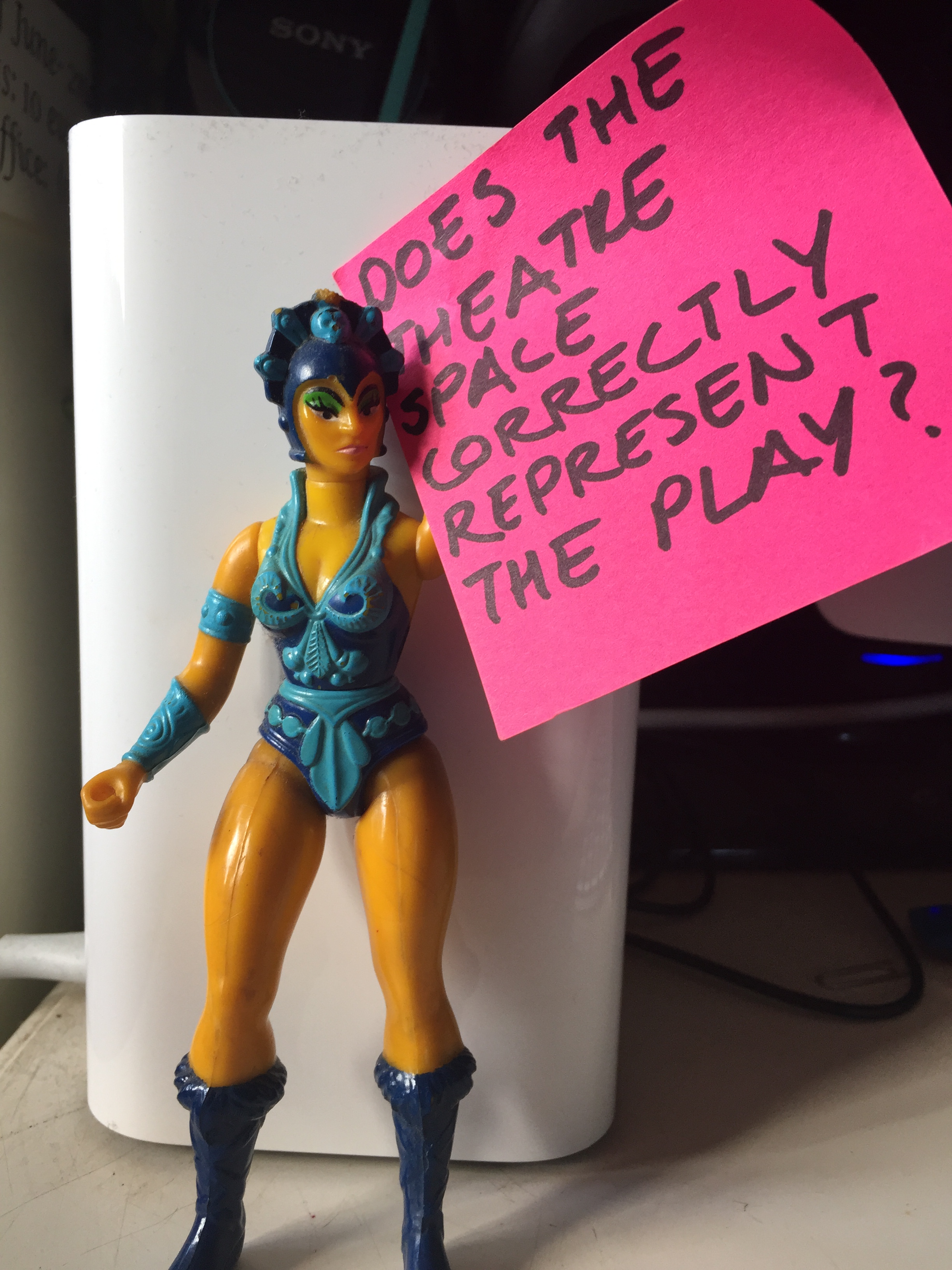
As Lyn beautifully poses, do you think the space where the play is being performed is in harmony with context of the play?

Do you think you need to add anything to the theatre experience, this could be food or drink or even decorating the foyer. Or giving the audience information about the play.
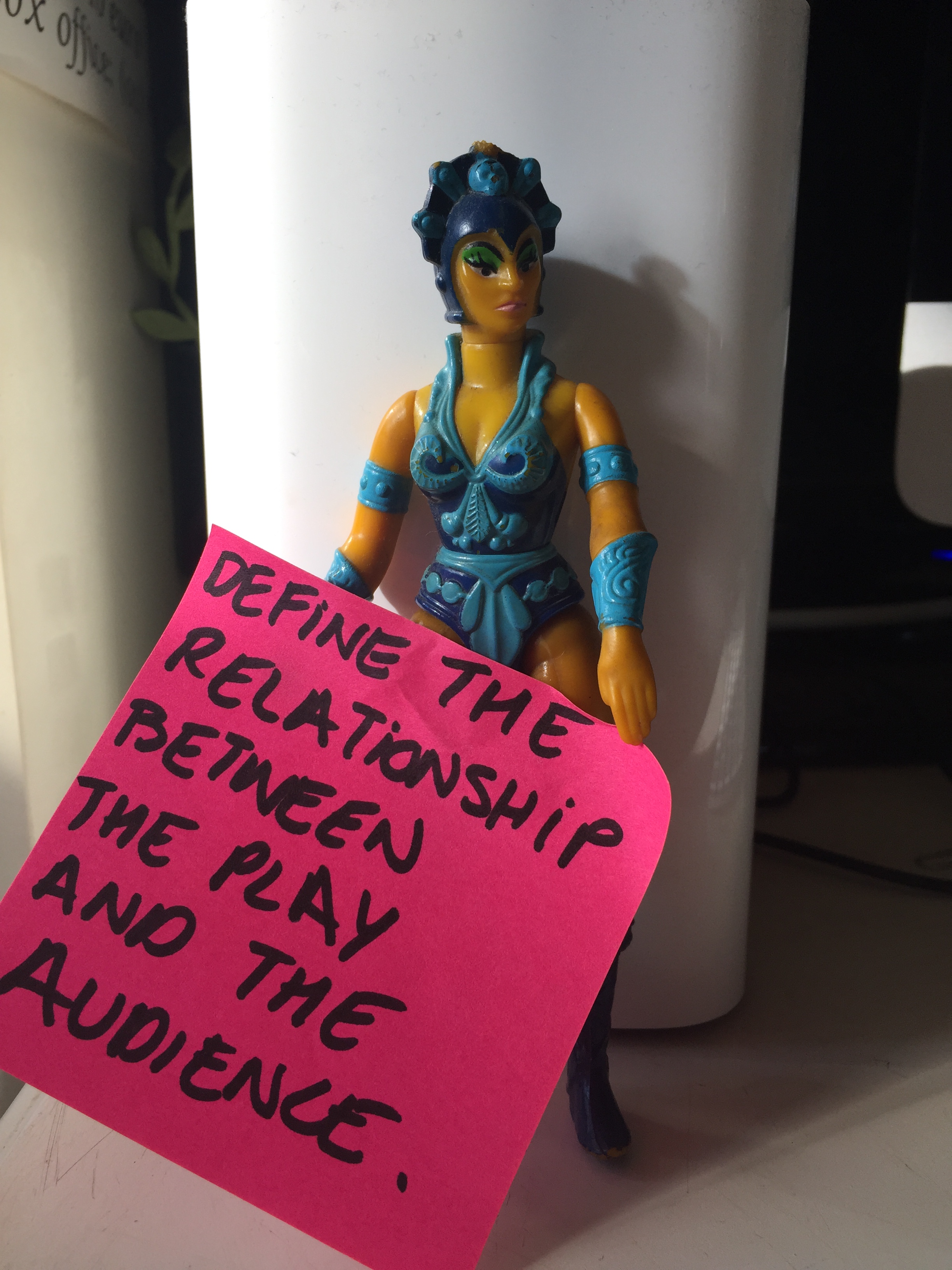
Define how you think the this relationship is created, this is before you ever see the audience.
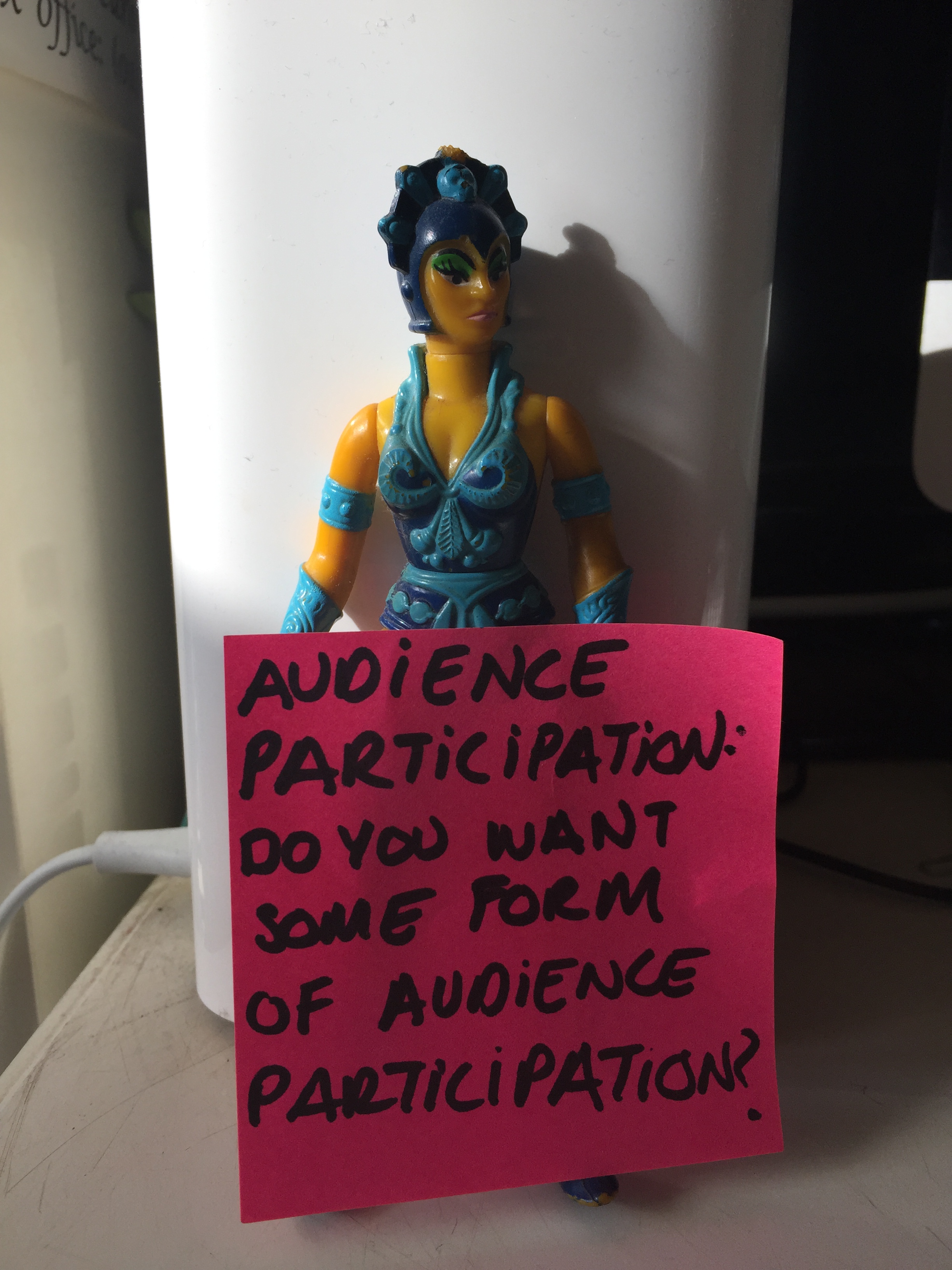
An audience can participate all of which depends on the context of the play. As in it can’t come out of random. If you don’t want audience participation that is also fine, it all depends on context.
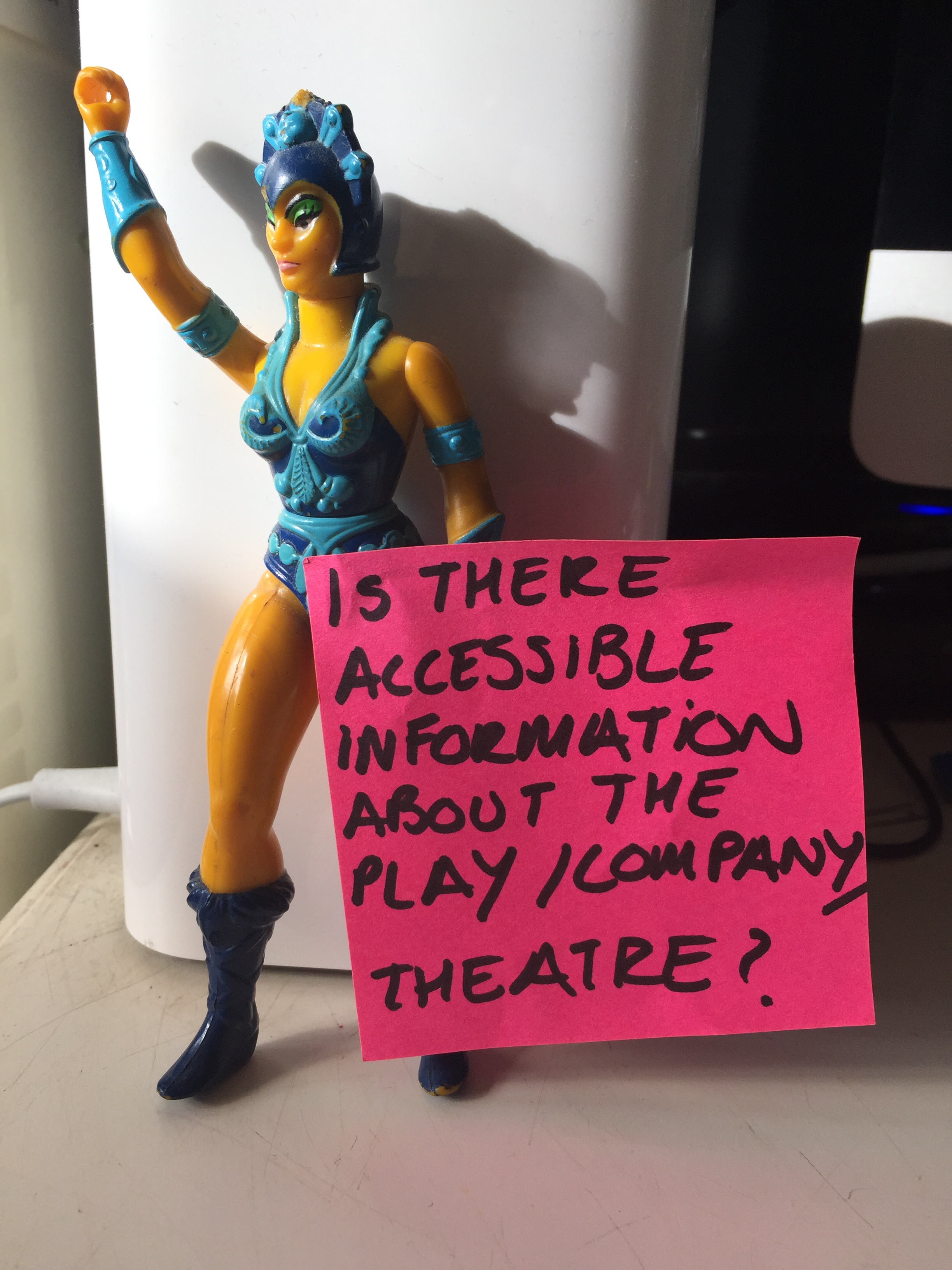
An audience loves information about the work and the company, if you don’t have the funds to create programmes why not put info on the wall.
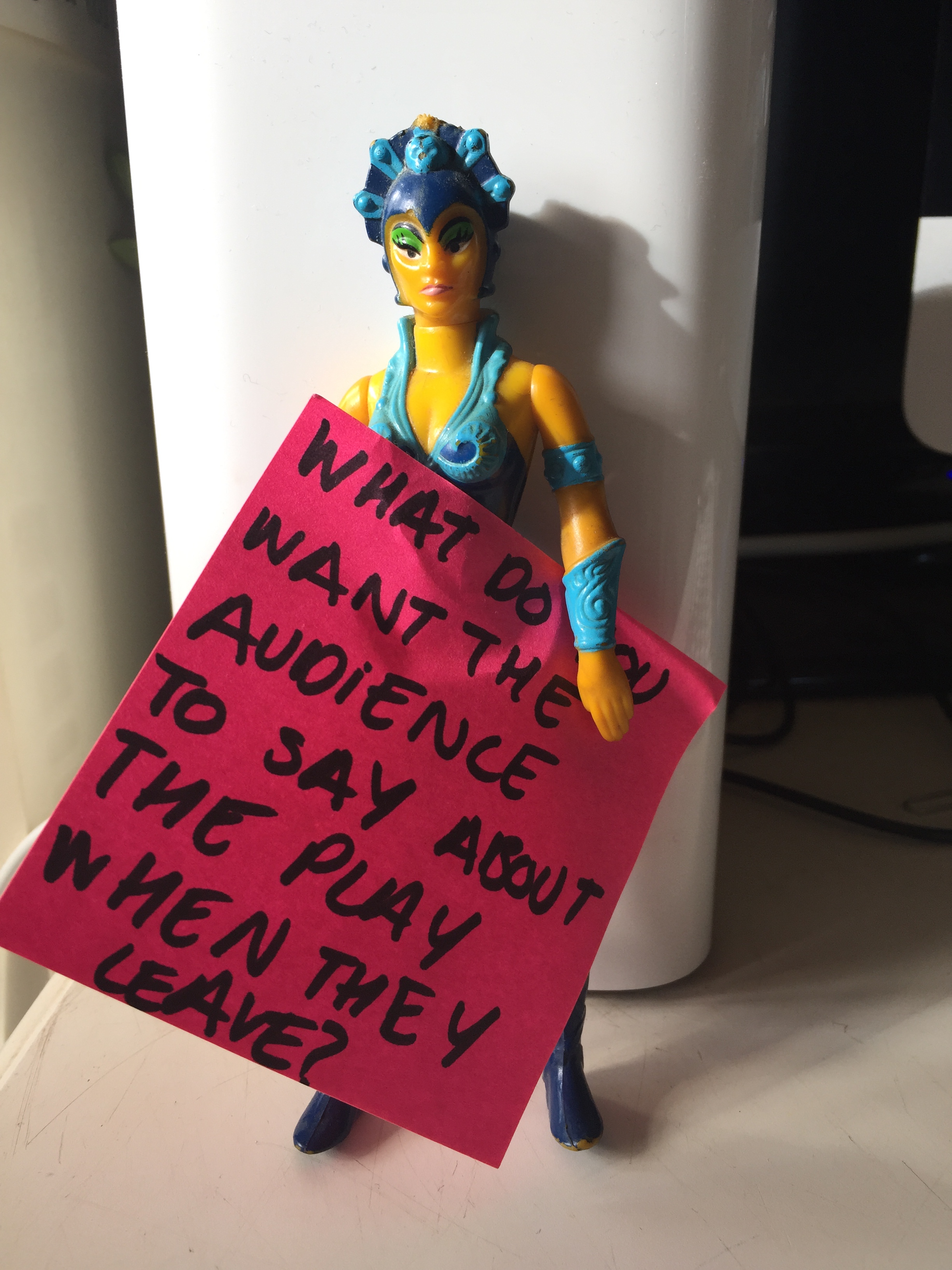
What do you want the audience to say about the play when they leave?
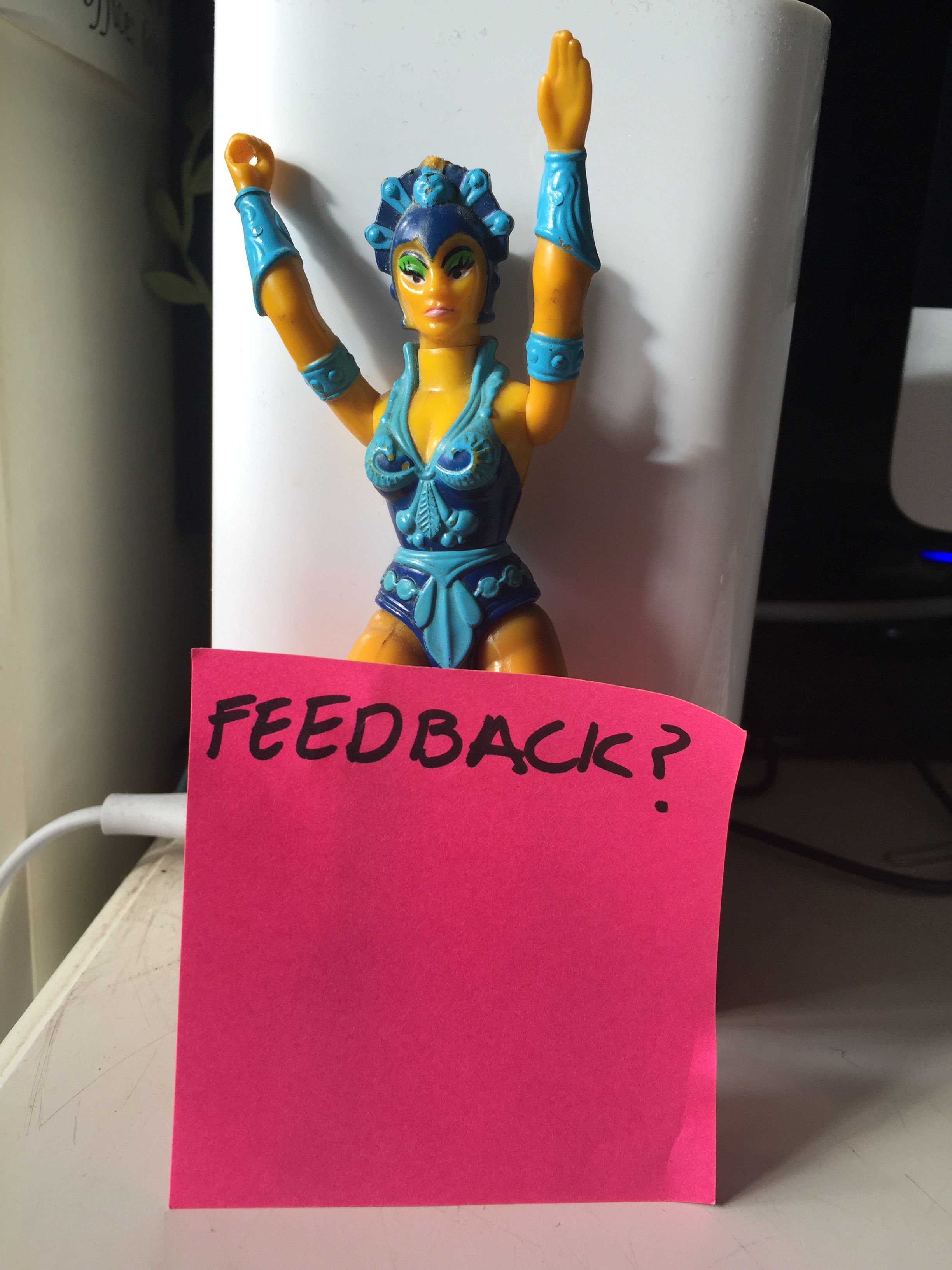
Ask the audience for some feedback either on paper or online.
Thanks Lyn for all of your help. As Lyn has shown, audience development can be embraced into your theatre making, sometimes it makes it a bit easier, don’t believe me, well, fine then! I do realise audience development can also be interpreted into a different process to what I have described but that is because I have related this process to the dramaturgy of a piece of work, or the context of a piece of work with relation to the audience.
Don’t worry the next dramaturg report will be more coherent and less about Jessica Fletcher.
That’s a lie.
Thank you for reading with your eyeballs.
All rights reserved to Katie Poushpom, k.e.poushpom
 The Madwoman in the Theatre.